How Much Does a Geological Survey Cost in Tbilisi? Prices in GEL (2026)
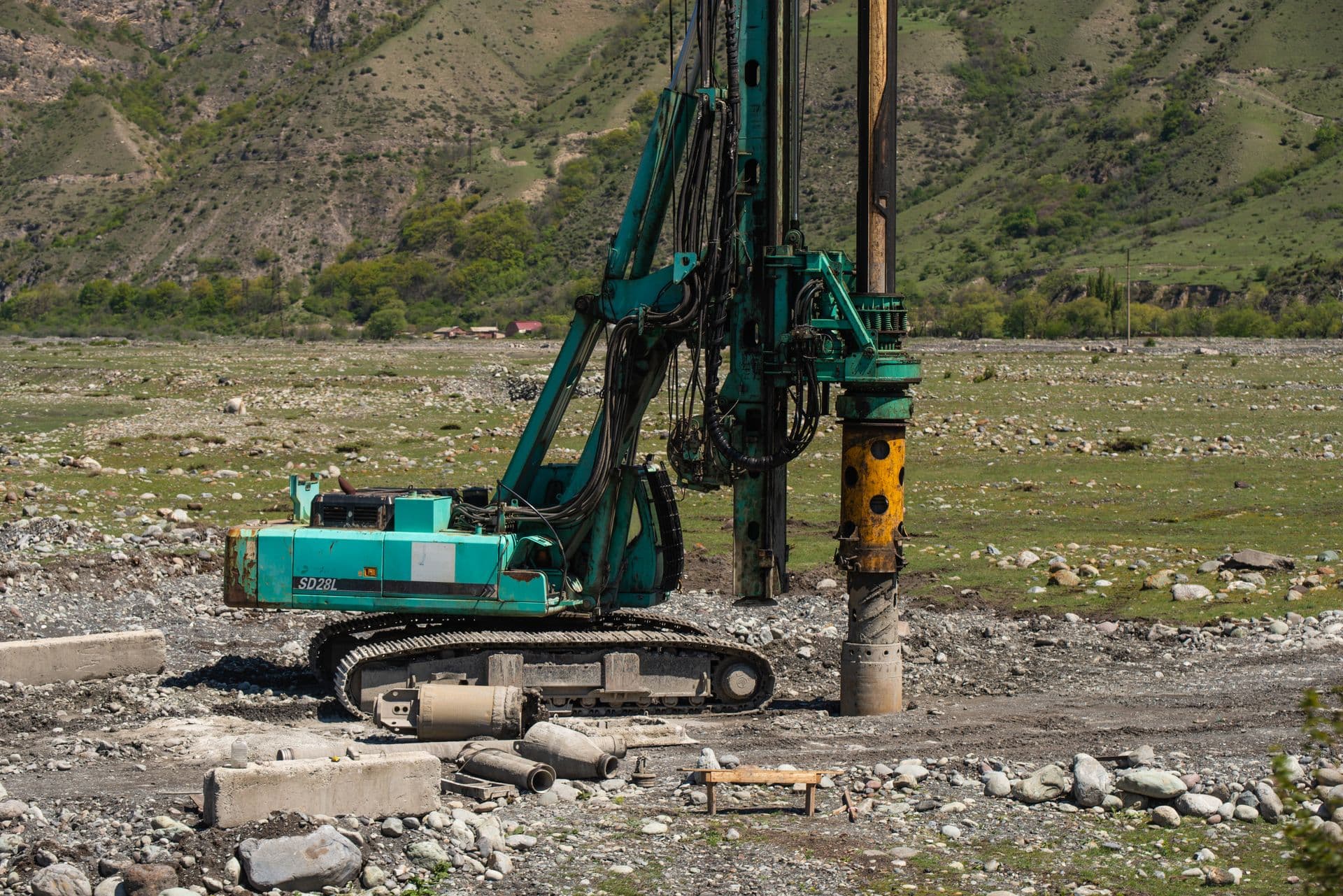
Table of Contents
"Call us and we'll work it out." That is how most geological companies in Tbilisi answer the price question. We checked: out of more than 20 firms performing geotechnical site investigations in the capital, not a single one publishes a price list. Yet no serious construction project in Georgia — from a private house to a wind farm — gets built without a geological report.
The good news: verifiable numbers do exist. Georgia has an official state tariff for engineering-geological works, approved by government decree. In this article we break it down line by line — drilling, test pits, laboratory testing, seismic studies — so you can estimate your site investigation budget before the first phone call.
The Short Answer: Typical Costs in Tbilisi
If you just need a quick benchmark, here are the key figures from the official state tariff (Decree No. 14 of the Government of Georgia, 16 January 2023):
- Drilling within Tbilisi — 200 GEL per linear meter.
- A typical package for a private house (2 boreholes of 10 m each, laboratory testing, report) — around 5,200–5,500 GEL at state rates. On the competitive private market the final quote is often lower.
- Site seismological study — 4,000 GEL per site.
- Base rate for an engineering-geological investigation — 500 GEL per site, plus the cost of the works actually performed.
For reference, at roughly 2.7 GEL per US dollar, a typical private-house package works out to about 1,900–2,000 USD. Below we explain where these numbers come from and what exactly goes into a quote.
What Makes Up the Price
A geotechnical investigation is not a single service but a package of works. A quote typically covers four blocks:
- Mobilization. Getting the drilling rig and crew to your site. Within Tbilisi this is a minor line item; outside the city it grows with distance.
- Field works. Borehole drilling, test pits, in-situ testing (such as the Standard Penetration Test, SPT) and soil sampling. Usually the largest cost item.
- Laboratory testing. Every soil sample goes through a series of tests: moisture content, density, grain size, compression and shear strength. The number of tests depends on how many soil layers are identified.
- Analysis and reporting. The geotechnical engineer compiles the data into a report with cross-sections, soil parameters and foundation recommendations — the document your structural designer and the permitting review actually need.
For seismically sensitive sites and critical buildings, a separate seismological study is added to the package.
Official State Tariffs: Drilling and Test Pits
The only openly published, legally approved price list for geological works in Georgia is the tariff of the Levan Samkharauli National Forensics Bureau, set by Decree No. 14 of the Government of Georgia, 16 January 2023.
An important caveat: these are the rates of a state bureau that performs official and forensic expert assessments — not a "market average". Private companies set their own prices and, in a competitive market, often offer more flexible terms. But as a legally established reference point, the state tariff is invaluable.
| Work | Conditions | Tariff |
|---|---|---|
| --- | --- | --- |
| Engineering-geological investigation (base rate) | per site | 500 GEL |
| Drilling | within Tbilisi | 200 GEL/m |
| Drilling | up to 100 km from Tbilisi | 230 GEL/m |
| Drilling | 100–300 km from Tbilisi | 260 GEL/m |
| Drilling | over 300 km | 300 GEL/m |
| Test pit excavation | per linear meter | 300 GEL/m |
| Site seismological study | per site | 4,000 GEL |
| Slope stability analysis (including seismic effects) | per cross-section | 5,000 GEL |
Note the seismic line items: Georgia is a seismically active region, and for many projects a site-specific seismic assessment is not an option but a design requirement.
Laboratory Soil Testing Prices
Field works produce samples — the laboratory turns them into numbers your designer can use. Under the same state tariff, the core tests cost:
| Test | Tariff per sample |
|---|---|
| --- | --- |
| Moisture content | 50 GEL |
| Natural density | 50 GEL |
| Grain size analysis | 100 GEL |
| Plasticity | 80 GEL |
| Collapse potential | 70 GEL |
| Swelling | 50 GEL |
| Oedometer (compression) test | 200 GEL |
| Shear strength | 150 GEL |
| Unconfined compression | 200 GEL |
| Triaxial compression | 500 GEL |
| CBR (bearing capacity) | 150 GEL |
| Permeability coefficient | 150 GEL |
A typical private-house report requires 8–12 tests — roughly 700–1,000 GEL in total. The more soil layers your site has, the more samples and tests are needed. More on the methods on our soil investigation page.
Worked Example: A Private House in Tbilisi
Let's build a quote at state-tariff rates for a typical task: a two-storey private house in Tbilisi, 2 boreholes of 10 meters each.
| Item | Calculation | Amount |
|---|---|---|
| --- | --- | --- |
| Investigation base rate | per site | 500 GEL |
| Drilling | 20 m × 200 GEL | 4,000 GEL |
| Laboratory testing | 8–12 tests | 700–1,000 GEL |
| Total | ≈ 5,200–5,500 GEL |
To repeat: this is a calculation at the official state bureau's rates. A private contractor may quote less (competition, standard site) or more (difficult geology, urgency, extended requirements). But if a quote you receive differs from this benchmark several times over — in either direction — that is a reason to ask questions.
Some context: a site investigation is a small fraction of a house construction budget. Choosing the wrong foundation because ground conditions were unknown costs incomparably more — retrofitting the foundation of an existing building costs many times more than any borehole.
What Drives the Final Price
Why can two quotes for the "same" investigation differ by a factor of two? The main drivers:
- Number and depth of boreholes. Determined by the building height, basement and foundation type. Regional practice calls for at least 2 boreholes for a private house; multi-storey buildings need more and deeper ones.
- Site geology. Slopes, fill soils, high groundwater, Tbilisi's landslide-prone zones — all increase the scope of work.
- Seismics. Critical structures require a site-specific seismic assessment — a separate 4,000 GEL under the tariff.
- Distance and access. The drilling tariff rises with distance from Tbilisi (see table above), and difficult site access raises mobilization costs.
- Project requirements. International standards (Eurocode 7) and lender-compliant investigation requirements for project financing expand the testing program.
- Urgency. Accelerated fieldwork and lab schedules cost more.
Why Companies Do Not Publish Prices
We reviewed more than 20 geological companies in Tbilisi: none publishes an open price list. The reason is not secrecy but the nature of the service: an investigation program is designed for a specific site and building, and an honest price only exists once the number of boreholes, their depth and the testing scope are defined.
To get an accurate quote quickly, prepare for the contractor:
- The site address or coordinates.
- The type and number of storeys of the planned building, and whether it has a basement.
- The project stage (concept, detailed design, architectural project in hand).
- Special requirements — Eurocode 7, bank requirements, an international report format.
When comparing offers, look past the bottom line at the scope: how many boreholes and meters of drilling are included, which laboratory tests, what report format, what timeline. A cheap quote with two tests instead of ten is not savings — it is risk poured straight into your foundation.
Timelines: How Long It Takes
Typical delivery times for a geological survey in Georgia:
| Stage | Small project | Medium project | Complex project |
|---|---|---|---|
| --- | --- | --- | --- |
| Field works (drilling) | 3–5 days | 1–2 weeks | 2–4 weeks |
| Laboratory testing | 5–7 days | 2–3 weeks | 3–5 weeks |
For a private house, a realistic horizon from rig mobilization to a finished report is 2–3 weeks. Build this into your project schedule before foundation design starts: the report is for your designer, not for the builders after the fact.
If you are planning construction in Tbilisi or anywhere in Georgia, the Georgian Geotechnical Group team will prepare a site-specific quote within 24–48 hours — with a transparent scope and no hidden items. Contact us and we will price your project.
Frequently Asked Questions
How much does a geological survey for a private house cost in Tbilisi?
At official state-tariff rates (Decree No. 14/2023 of the Government of Georgia), a typical package — 2 boreholes of 10 m, laboratory testing and a report — comes to roughly 5,200–5,500 GEL. Private companies quote individually: on the competitive market the total can be lower, or higher for difficult geology.
How much does one meter of drilling cost in Tbilisi?
The official tariff of the state forensics bureau is 200 GEL per linear meter of drilling within Tbilisi. The rate rises with distance from the capital: up to 100 km — 230 GEL/m, 100–300 km — 260 GEL/m, over 300 km — 300 GEL/m.
Is a geotechnical investigation mandatory for construction in Georgia?
An engineering-geological report is a standard part of design documentation for capital construction: the foundation designer and the project review rely on it. The exact requirements depend on the building class and purpose — confirm them with your architect or structural designer at the start of the project.
How many boreholes does a private house need?
Regional practice calls for at least 2 boreholes about 8–10 meters deep for a private house. The exact number and depth are set by the investigation program: building height, a basement, the foundation type and site geology can increase the scope.
How long does a site investigation take?
For small projects, fieldwork takes 3–5 days and laboratory testing 5–7 days, plus report preparation. A realistic start-to-report timeline for a private house is 2–3 weeks. Medium and complex projects take 3 to 9 weeks.
Can you save money on a geotechnical investigation?
Save on organization, not on scope: a precise brief, combined field campaigns and early planning reduce the price. Cutting the number of boreholes or lab tests is false economy — a foundation error caused by incomplete data costs many times more than the investigation itself.